Michigan winters put residential plumbing systems to the test.
When temperatures fall far enough, water inside vulnerable pipes can freeze. The resulting plumbing problem can range from a faucet that suddenly stops working to damaged piping and significant water leakage.
The best time to think about frozen pipes is before a cold snap arrives.
At Way Maker Plumbing and Heating, we encourage homeowners to identify vulnerable plumbing, prepare the home for freezing temperatures, and know what warning signs require professional attention.
Why Are Frozen Pipes Such a Problem?
Water freezing inside a plumbing system can create pressure and stress within the pipe.
The damage isn’t always immediately obvious.
A frozen section may prevent water from flowing, but a leak can become apparent as conditions change and the pipe thaws.
That means a homeowner may initially think the problem is simply “no water” and later discover water escaping from damaged plumbing.
If you find signs of leaking or damaged piping, professional pipe repair may be necessary.
Which Pipes Are Most Likely to Freeze?
Pipes become more vulnerable when they’re exposed to colder conditions.
Homeowners should pay particular attention to plumbing in areas such as:
- Exterior walls
- Unheated or poorly heated spaces
- Garages
- Crawl spaces
- Basements
- Areas near exterior openings
- Plumbing serving outdoor fixtures
Every house is different, so the vulnerable areas in one home may not match those in another.
Older homes, previous renovations, insulation differences, and plumbing layout can all affect where problems develop.
How Can You Help Prevent Frozen Pipes?
Preventive measures should focus on limiting pipes’ exposure to extreme cold and maintaining appropriate heat around vulnerable plumbing.
Insulate Vulnerable Plumbing
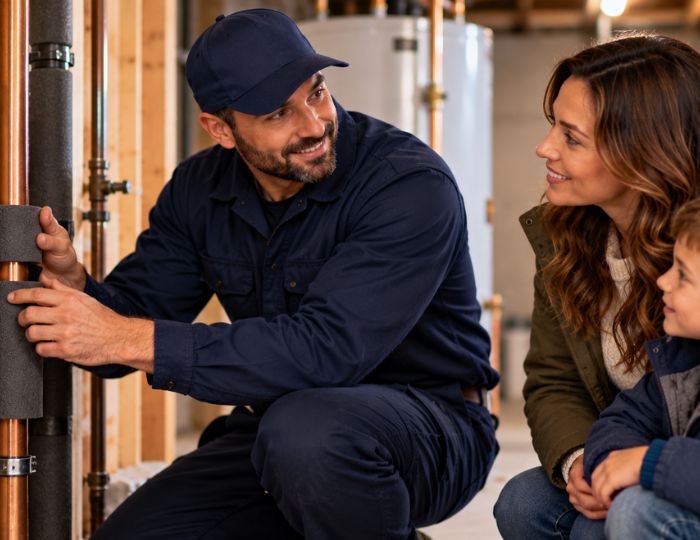
Pipe insulation can provide added protection in cold areas.
If you already have insulated pipes, inspect the material periodically for deterioration, gaps, or sections that have become exposed.
For pipes that repeatedly freeze, don’t assume adding more insulation is necessarily the complete solution. There may be a broader issue involving placement, airflow, insulation, or the surrounding space.
Keep Your Home Adequately Heated
Turning the heat dramatically down during cold weather can leave vulnerable parts of the plumbing system exposed to lower temperatures.
This is especially important when leaving home for a winter trip.
Your furnace isn’t just keeping the living room comfortable—it can also play a role in maintaining temperatures throughout the structure.
If your heating system isn’t keeping up, furnace repair may need attention before severe winter weather arrives.
Reduce Cold Air Around Pipes
Cold drafts can expose plumbing to extremely low temperatures.
Check areas around windows, doors, exterior penetrations, crawl spaces, and other openings where cold air may reach pipes.
A pipe located in an otherwise heated building can still become vulnerable if freezing outdoor air is continually blowing directly across it.
What Are the Signs of a Frozen Pipe?
Sometimes the first clue is obvious: you turn on a faucet and little or no water comes out.
Other potential warning signs can include:
- Sudden loss of water flow at one fixture
- Unusually weak flow during freezing weather
- Frost visible on accessible piping
- Plumbing behaving differently during extreme cold
- Water appearing after a frozen section begins thawing
Low water pressure can have many causes besides frozen plumbing. Our guide to causes of low water pressure covers several other possibilities.
If the problem appears suddenly during extremely cold weather, however, frozen plumbing should be considered.
What Should You Do if You Think a Pipe Is Frozen?
First, don’t ignore it.
A frozen pipe can potentially become a leaking pipe.
Avoid unsafe thawing methods involving open flames or other methods that could create fire, electrical, or property hazards.
If you cannot safely identify and address the situation, call a professional plumber.
Way Maker Plumbing and Heating provides plumbing repair for a wide range of residential plumbing problems.
If the situation is urgent, our guide explaining when to call an emergency plumber can help homeowners understand which plumbing problems should not be postponed.
What if a Frozen Pipe Bursts?
If a pipe breaks and water is escaping, limiting additional water damage becomes the priority.
Know where your home’s main water shutoff is located before an emergency happens.
If you can safely shut off the appropriate water supply, doing so may help limit additional leakage while you arrange repairs.
Afterward, the damaged section of plumbing needs to be properly evaluated and repaired.
Water can also travel behind walls, beneath flooring, and into other concealed areas, so visible water isn’t always the full extent of the problem.
Professional leak detection and repair can be useful when the source or extent of a leak isn’t obvious.
You can also review our guide to hidden plumbing leak warning signs for symptoms worth watching for.
Should You Replace Pipes That Keep Freezing?
A pipe that freezes repeatedly deserves more attention than repeatedly thawing it every winter.
The location or configuration of the plumbing may contribute to the recurring problem.
Depending on the circumstances, a plumber may discuss insulation, repairs, rerouting, or replacement options.
Way Maker Plumbing and Heating offers pipe installation and replacement when aging, damaged, or problematic piping needs a more substantial solution.
The appropriate approach depends on the individual home and plumbing system.
Frozen Pipe Help in Northern Michigan
Preparing before temperatures plunge can save homeowners considerable stress.
Way Maker Plumbing and Heating provides plumbing services across the areas we serve, including dedicated information for frozen pipes in Cadillac, frozen pipes in Petoskey, and frozen pipes in Traverse City.
Before the next deep freeze, take a few minutes to identify vulnerable pipes, locate your main water shutoff, and address known plumbing problems.
If you need help preparing or dealing with a plumbing problem, contact Way Maker Plumbing and Heating.
Key Takeaways
- Pipes in colder or poorly heated areas can be especially vulnerable to freezing.
- Insulation, adequate indoor heat, and reducing cold drafts can help protect vulnerable plumbing.
- Little or no water from a fixture during freezing weather can be a warning sign.
- Avoid dangerous thawing methods involving open flames.
- Know where your main water shutoff is before an emergency occurs.
- A frozen pipe can become a leaking or damaged pipe as it thaws.
- Plumbing that repeatedly freezes deserves professional evaluation rather than the same temporary fix every winter.